

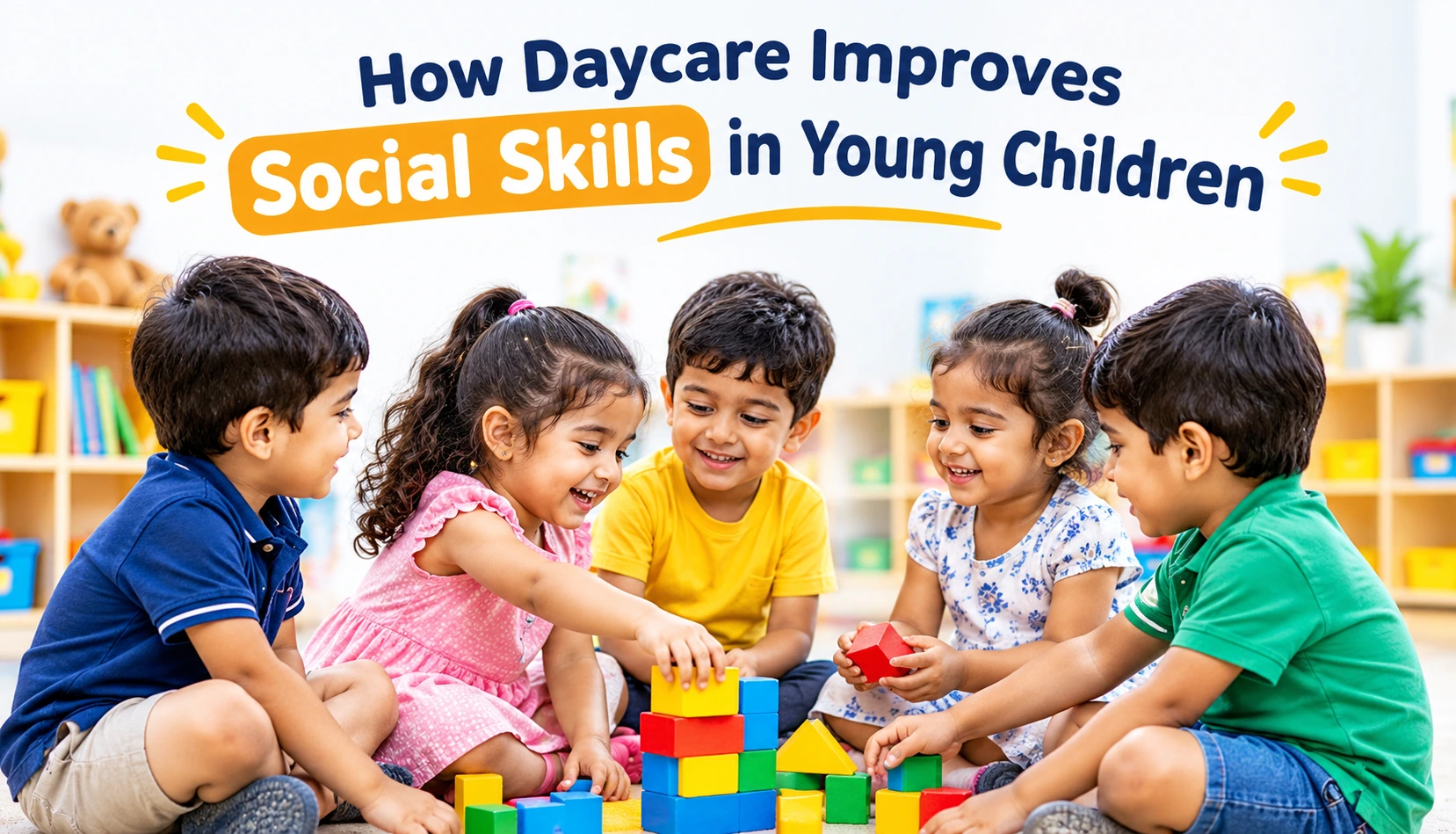
Choosing the best daycare in Bhubaneswar can give children regular opportunities to meet peers, communicate, share and learn to play together. A caring daycare setting helps them practise everyday social skills while becoming more comfortable in group situations.
Daycare is more than a place to learn and play; it’s where young children discover the joy of friendship, learn to share, build confidence, and develop the social skills that shape their future.
1. Why Social Skills Matter in Early Childhood
Social skills help children interact with the people around them. They include simple but meaningful abilities such as greeting someone, listening, sharing toys, waiting for a turn and expressing feelings without hurting others.
Young children do not learn these behaviours all at once. They develop through everyday experiences with parents, caregivers and other children. A child may initially find it difficult to share a favourite toy or join a group game. With patient guidance and repeated opportunities, these situations become easier to handle.
These skills also support a child's experience at preschool and school. Children who have practised listening, communicating and cooperating may feel more comfortable taking part in group activities. Social development is not about making every child outgoing. A quiet child can have healthy social skills too; the goal is to help each child feel secure enough to communicate and connect in their own way.
2. How Daycare Helps Children Develop Social Skills
A daycare setting gives children opportunities to interact with people beyond their immediate family. Regular contact with other children can help them understand that everyone has different preferences, feelings and ways of communicating.
Here are some of the everyday skills they can practise.
2.1. Learning to Share and Take Turns
Sharing can be difficult for young children, particularly when they are attached to a toy or activity. In a daycare environment, they get opportunities to practise waiting, exchanging toys and allowing another child to participate.
For example, two children may want to use the same set of building blocks. A caregiver can guide them to take turns or build something together. The experience teaches children that play can continue even when they need to wait.
These small moments help children gradually understand patience, cooperation and respect for others.
2.2. Communicating with Other Children
Children learn communication by listening, responding and expressing what they need. Playing with peers gives them reasons to use words, gestures and facial expressions to make themselves understood.
They may ask another child to join a game, explain what they are building or tell a caregiver when something is wrong. They also learn to notice when someone else is speaking.
Caregivers can support this development by speaking clearly, listening patiently and encouraging children to express their thoughts. Children who are still developing language skills should also be given time to respond without pressure.
2.3. Building Friendships and a Sense of Belonging
Friendships often begin with simple interactions. A child may sit beside another child during an activity, offer a toy or join a game. Repeated positive experiences can help familiarity grow into friendship.
Being part of a group also gives children a sense of belonging. They begin to recognise familiar faces, understand shared routines and feel more comfortable participating.
Being part of a group also gives children a sense of belonging. They begin to recognise familiar faces, understand shared routines and feel more comfortable participating.
Not every child makes friends immediately. Some prefer to observe before joining in. A supportive caregiver should respect this pace rather than force interaction.
2.4. Understanding Feelings and Showing Empathy
Children are still learning how to recognise and manage emotions. Group experiences can help them notice that other people also feel happy, sad, frustrated or disappointed.
If a child sees a friend crying after a toy is taken away, a caregiver can explain what may have happened and encourage a kind response. Children can learn to say sorry, offer help or give someone space.
They may not respond perfectly every time, and that is normal. What matters is having patient adults who explain feelings and guide children towards considerate behaviour.
2.5. Learning to Follow Routines and Cooperate
A regular daycare schedule can help children understand what happens next and what is expected during shared activities. They practise moving from one activity to another, listening to simple instructions and participating with others.
For instance, children may need to tidy up after playtime or wait until everyone is ready before moving to the next activity. These experiences encourage responsibility and cooperation.
A predictable routine can also make group settings feel less unfamiliar, especially for children who are new to daycare.
2.6. The Role of Play in Social Development
Play gives children a natural reason to interact. They do not need formal lessons to begin learning how to cooperate; everyday games and shared activities can create useful opportunities.
Some examples include:
Building games: Children can exchange blocks, share ideas and work towards a common creation.
Pretend play: Playing shop, family or kitchen encourages conversation and helps children explore different roles
Storytelling: Listening to a story together gives children a chance to respond, describe characters and hear other viewpoints.
Art activities: Drawing or making something alongside peers encourages children to share materials and appreciate each other's work.
Group games: Simple activities can help children practise listening, following instructions and waiting for a turn.
The value of an activity depends partly on how adults guide it. Children need room to explore, make small mistakes and try again. Constant correction can make them hesitant, while gentle guidance helps them learn through experience.
3. What Parents Should Look for in a Daycare
A daycare should meet your child's care needs while giving them opportunities to learn and interact. Before choosing a centre, look beyond the appearance of the space and ask how children's everyday experiences are managed.
Consider these points during a visit:
Care and supervision: Ask how children are supervised throughout the day and who is responsible for their care.
Daily routine: Understand the schedule for activities, meals, rest and play.
Social interaction: Ask how children are encouraged to play together and how caregivers handle disagreements.
Communication with parents: Find out how the centre shares updates about a child's day, behaviour and adjustment.
Cleanliness and safety: Observe the rooms, play areas, washrooms and general hygiene practices.
Stay options: Check whether the centre's short-term or long-term stay arrangements suit your family's requirements.
If you are comparing options for the best day care facility in Bhubaneswar, visit in person wherever possible. A conversation with the staff can tell you a great deal about the centre's approach to care and children's daily routines.
4. Helping Your Child Adjust to Daycare
Starting daycare is a change for both children and parents. Some children settle quickly, while others need more time to feel comfortable around new people.
A few simple steps can make the transition easier:
Talk about daycare positively: Explain that your child will have a place to play, learn and meet other children. Keep the explanation simple and reassuring.
Build a familiar routine: Regular sleep and meal times can help children manage changes in their day.
Allow time to adjust: Do not expect your child to join every activity or make friends immediately
Keep goodbyes calm: A warm, clear goodbye is often more reassuring than leaving without explanation.
Share useful information with caregivers: Tell them about your child's interests, comfort habits, food preferences and any concerns.
Talk after daycare: Ask simple questions about what your child enjoyed or who they played with. Listen without turning the conversation into a test.
If your child cries or becomes quiet during the first few days, it does not automatically mean daycare is unsuitable. Speak with the caregivers, understand what they observe and agree on a patient adjustment plan.
5. How Hobby Dobby Supports Children's Daycare Needs
Parents looking for daycare in Bhubaneswar need a setting where children's care, routine and learning activities are considered together. Hobby Dobby's daycare facility page describes a centre in Nayapalli, Bhubaneswar, with short-term and long-term stay options. It also highlights regular care, educational activities, a safe atmosphere and support for following a schedule.
These are useful points for parents to discuss when considering a daycare arrangement. Ask how the daily schedule works, what activities children take part in and how caregivers help them interact with one another. You can also explain your child's personality and current routine so you can understand whether the setting may be a suitable fit.
Visit the Hobby Dobby daycare page to review the available information and make an enquiry about the facility.
6. Frequently Asked Questions
1. How does daycare help children become more social?
Daycare gives children regular opportunities to interact with peers and caregivers. Through shared play, conversations and daily routines, they can practise greeting others, sharing, taking turns and expressing feelings. These experiences help children become more familiar with group settings, although each child develops social confidence at their own pace.
2. Will daycare help a shy child make friends?
Daycare can give a shy child gentle opportunities to become familiar with other children. They may first observe a group, then join a simple activity when they feel ready. Caregivers should respect this pace and encourage participation without pressure. Parents can ask how the centre supports children who need extra time to settle in.
3. What social skills should a child learn before starting preschool?
Children do not need to master social skills before preschool. It can help if they have begun practising simple behaviours such as listening, asking for help, sharing with support, waiting briefly and communicating basic needs. These abilities continue to develop through family interactions, play and experiences in group settings.
4. How long does it take for a child to adjust to daycare?
There is no fixed adjustment period. Some children become comfortable within a short time, while others need a gradual transition and consistent reassurance. A child's age, temperament, previous group experiences and the centre's approach can all influence the process. Regular communication between parents and caregivers can help identify what support is needed.
5. What should parents ask a daycare about children's social development?
Ask how children spend time together, what group activities are available and how caregivers respond to disagreements or emotional moments. It is also useful to understand how staff support quieter children and share progress with parents. Specific examples of a typical day can help you judge whether the approach suits your child.
5. How can I choose a suitable daycare in Bhubaneswar?
Start by visiting centres that are practical for your family's daily routine. Check supervision, cleanliness, schedules, communication with parents and opportunities for children to interact. Ask about stay options and how the staff handle a child's settling-in period. A visit and direct conversation can help you compare facilities more confidently.
HobbyDobby
Choosing a daycare is a personal decision. If you are considering a place where your child can follow a daily routine, receive regular care and take part in educational activities, speak with the Hobby Dobby team about its daycare arrangements in Nayapalli, Bhubaneswar.
NAYAPALLI: Plot No- A/6,Nilakantha Nagar, Nayapalli, Unit-8,Bhubaneswar-751012
PATRAPADA: MIG 10, Udayagiri Vihar, Near Udayagiri Vihar Mini Park, Patrapada - 751019
Ask about the available stay options, daily schedule and the way children are supported during their time at the centre. These details can help you decide whether the facility fits your child's needs.
Conclusion
Social skills grow through everyday experiences. Sharing a toy, joining a game, listening to another child and learning to express feelings may seem like small moments, but they help children become more comfortable interacting with others.
A good daycare should give children time to play, follow routines and build relationships while receiving attentive care. If you are comparing daycare facilities in Bhubaneswar, visit Hobby Dobby, discuss your child's needs with the team and understand how its daily arrangements work before making your decision.
ENROLL NOW