
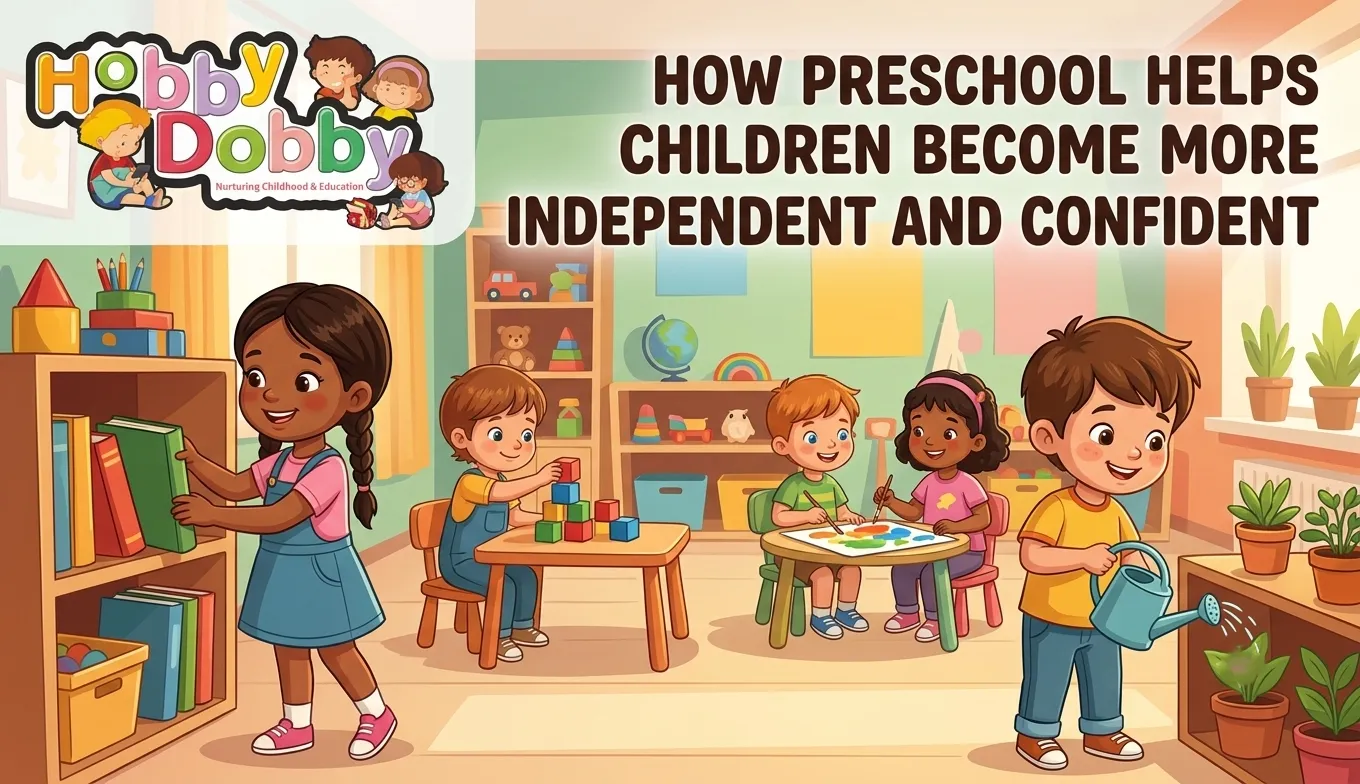
The best preschool in Bhubaneswar should help children learn more than letters and numbers. It should also give them chances to make choices, handle small tasks, solve simple problems, and become confident in doing things independently.
Preschool is often the first place where children experience regular routines outside their homes. A child may learn to keep belongings in the right place, open a lunch box, wash hands, tidy up after an activity, or ask for help when needed. These may look like small habits, but they are useful steps towards becoming more responsible.
1. Why Independence Matters in the Preschool Years
Young children naturally depend on their parents for many everyday tasks. Parents dress them, pack their bags, feed them, arrange their belongings and quickly solve problems when something goes wrong.
That care is completely natural. Still, children also need opportunities to try things themselves.
A preschool can provide a safe setting where children can practise age-appropriate responsibilities. Completing a simple task gives a child a sense of achievement. Over time, these experiences can support confidence, communication, patience and problem-solving.
A good preschool for kids in Bhubaneswar should give children room to try, make small mistakes and try again rather than expecting everything to be perfect on the first attempt.
2. What Children Learn to Do on Their Own
Independence at preschool does not mean leaving children to manage everything without help. Teachers provide guidance while allowing children to participate.
Depending on their age and ability, children may practise:
Keeping their school bag or belongings in the right place
Washing and drying their hands
Opening and closing lunch boxes
Putting toys and learning materials away
Choosing between simple activities
Carrying their own water bottle
Putting on or removing simple footwear
Cleaning up after play
Asking for assistance when something is difficult
Waiting for their turn during group activities
These activities may seem ordinary to adults. For a young child, they are opportunities to practise coordination, decision-making and responsibility.
3. How Preschool Teachers Encourage Independence
Teachers have an important role in helping children become comfortable with everyday responsibilities. Instead of immediately completing a task for a child, a teacher may give the child a little time to attempt it.
For example, if a child is struggling to open a lunch box, the teacher can demonstrate the action and then allow the child to try again. If a child spills something while working on an activity, the teacher can guide them to clean the area instead of simply doing it for them.
This kind of support teaches an important lesson: I can try.
The reference article also highlights how preschool routines can encourage children to participate in tasks such as organising materials, washing hands, serving snacks carefully and cleaning up after activities.
4. Why Parents Sometimes Do Too Much
Parents usually help because they care. Sometimes the morning is rushed, so it is quicker to put on the child's shoes. Sometimes a child is taking too long to eat, so parents step in. At other times, adults simply want to prevent a mess.
There is nothing wrong with helping a child when help is genuinely needed. The challenge comes when adults regularly take over tasks that a child is ready to attempt.
Parents can slowly create opportunities for independence by asking:
Can my child do this with a little guidance?
Can I give them a few extra minutes to try?
Is the task safe for their age?
Can I show them once and let them practise?
Do I need to correct every small mistake?
Children do not need to perform every task perfectly. They need repeated chances to practise.
5. Everyday Skills That Build Confidence
Small responsibilities can have a bigger impact than parents sometimes expect.
A child who learns to pack away crayons after drawing is learning responsibility. A child who carries their own small bag is practising independence. A child who chooses between two activities is learning to make simple decisions.
Other useful self-help skills include:
Feeding themselves appropriately
Tidying toys
Wearing simple clothing items
Putting books back on a shelf
Following classroom routines
Asking questions
Expressing when they need help
Sharing materials with classmates
These skills can also make the transition into formal schooling easier because children become familiar with following routines and participating in classroom activities.
6. Independence and Social Development
Independence is not only about doing things alone. It also helps children participate more comfortably with other people.
When children know how to communicate their needs, follow routines and manage simple tasks, they may feel more comfortable in group situations. They learn that they can contribute rather than always waiting for an adult to do something for them.
For example, a child may help a classmate put away toys, wait for a turn or tell a teacher that something is difficult.
These everyday experiences can support social habits such as cooperation, patience and communication.
7. How Parents Can Support Independence at Home
The lessons children practise at preschool can continue at home. Parents do not need complicated activities. Simple routines are enough.
Try giving your child small responsibilities such as:
Let them put their toys away after playing.
Allow them to carry age-appropriate personal items.
Give them simple choices, such as choosing between two outfits.
Let them try wearing shoes before helping.
Encourage them to place used plates or cups in the appropriate place.
Give them enough time to complete simple tasks.
Praise effort instead of demanding perfect results.
A little patience can make a noticeable difference. Children may take longer at first, but repeated practice helps routines become familiar.
8. What to Look for in a Preschool
Parents searching for the top preschool in Bhubaneswar should look beyond classrooms, decorations and academic activities.
Ask how the preschool handles everyday routines. Do teachers encourage children to participate? Are children given age-appropriate responsibilities? Can they ask questions and express themselves? Is the environment safe and comfortable for young learners?
Parents can also ask about:
Teacher-child interaction
Classroom routines
Play and activity-based learning
Safety practices
Communication with parents
Age-appropriate learning activities
Opportunities for social interaction
Admission availability and programme details
The right preschool should support learning while respecting the child's pace of development.
9. Why HobbyDobby Can Be a Good Choice for Early Learning
For parents looking for a trusted preschool in Bhubaneswar for early education, strong>HobbyDobby focuses on creating learning experiences where young children can participate, explore and build everyday skills.
Parents considering the best preschool near me in Bhubaneswar can visit the preschool programme page to understand the available classes and make a more informed decision.
The aim should not be to make children independent overnight. It is to give them regular, age-appropriate opportunities to try things for themselves while having supportive adults nearby.
1. What is the best preschool in Bhubaneswar?
The best preschool depends on a child's age, learning needs, location and family preferences. Parents should look at the teaching approach, safety, teacher interaction, activities, routines and overall learning environment before choosing a preschool.
2. How does preschool help children become independent?
Preschool encourages children to participate in simple routines such as organising belongings, cleaning up after activities, making small choices and managing age-appropriate self-help tasks. Teachers guide children while allowing them to try.
3. Why are self-help skills important for preschool children?
Self-help skills give children regular practice with everyday tasks. They can support confidence, responsibility, coordination and problem-solving as children learn to manage small activities with less adult assistance.
4. How can parents encourage independence at home?
Parents can give children small, safe responsibilities, offer limited choices and allow enough time for them to try tasks themselves. Helping when needed is important, but children should also have opportunities to practise.
5. Is admission open at the best preschool in Bhubaneswar?
Admission availability changes by school and academic session. Parents looking for the best preschool in Bhubaneswar with admission open should contact the preschool directly for current admission information, age requirements and available programmes.
6. What should parents consider before preschool admission?
Parents should consider the child's age, school location, classroom environment, teacher interaction, daily routine, learning activities, safety arrangements, fees and admission process. A visit to the preschool can also help parents understand whether the environment feels suitable for their child.
Conclusion
Independence begins with small things. A child putting away a toy, carrying a bag, opening a lunch box or trying to wear shoes may seem like an ordinary moment, but each attempt gives them useful practice. A good preschool creates opportunities for children to learn these habits with patient guidance. Parents can strengthen the same habits at home by giving children time, responsibility and encouragement.
For families comparing preschools in Bhubaneswar, the focus should be on finding an environment where children can learn, communicate, play and gradually become more confident in managing age-appropriate tasks. strong>HobbyDobby can be considered by parents who want an early learning environment that gives attention to the whole child, not just classroom lessons.
ENROLL NOW